
Mark Fitchett
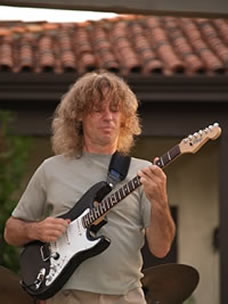
His Guitar & His Music
Licks - Tricks - Jams - Bands - Songs - Guitaring Apps
Composition - Music For Modern Dance

Custom Search


ARTICLES MUSIC FOR MODERN DANCE iPHONE APPS ANDROID APPS MILLION LICKS
| past performances X |
|
Mark Fitchett & Chasing the Blues |
Palos Verdes Public Library Art Show performance with guitarist Tim Wingate |
Jazz Singer Donna Butler with Mark Fitchett's Rockin' Blues Band on the main stage at the The Palos Verdes Street Fair in Rolling Hills Estates |
Jazz Flutist Stephanie James with The Mark Fitchett Band at The Key Club on Sunset Boulevard, Hollywood, CA. Smooth jazz with a latin twist |
Jazz Flutist Stephanie James with The Mark Fitchett Band A free concert at Point Fermin Park in San Pedro Jazz Flute meets Jazz Guitar Smooth Jazz with a Latin Touch Palos Verdes Marathon 5k |
Redondo Pier Art & Music Festival May 2nd & 3rd 2009 Mark will be performing classic jazz on Sunday May 3rd from 12-2 pm Check out their cool poster! Click Here |
Solo Guitar at the Palos Verdes Library Art Show 5-7pm |
Jazz Flutist Stephanie James with The Mark Fitchett Band A free concert at The El Segundo Plaza on Sepulveda N. of Rosecrans Jazz Flute meets Jazz Guitar Smooth Jazz with a Latin Touch |
Jazz Flutist Stephanie James with The Mark Fitchett Band Manhattan Beach 10k Jazz Flute meets Jazz Guitar Smooth Jazz with a Latin Touch 7:30 am Highland & Manhattan Beach Blvd. Near The Kettle |
Jazz Flutist Stephanie James with The Mark Fitchett Band "Sunday by the Sea" Fundraiser Jazz Flute meets Jazz Guitar Smooth Jazz 2-6 pm more info |
Mark Fitchett performs with smooth jazz artist Jessie Cooper 3:30 pm The Pico Festival in Santa Monica |
Jazz Flutist Stephanie James with The Mark Fitchett Band "Lobster Festival " Bristol Farms in Redondo Beach California Jazz Flute meets Jazz Guitar Smooth Jazz |
Donna Butler with The Mark Fitchett Band at the Peninsula Promenade 5-7 pm |
Lunada Bay Palos Verdes Concerts in the Park The Mark Fitchett Band w/Stephanie James Jazz Flute & Donna Butler Blues Vocalist |
Riviera Village Redondo Beach 6-7 pm The Mark Fitchett Band w/Stephanie James Smooth Jazz Flute |
Palos Verdes Street Fair & Music Festival w/Stephanie James Jazz Flute CLICK HERE |
Palos Verdes 10k w/Stephanie James Jazz Flute |
Alva's Dance Studio in San Pedro, CA The Mark Fitchett Band w/Stephanie James Jazz Flute Guest Artist (SEE VIDEO) |
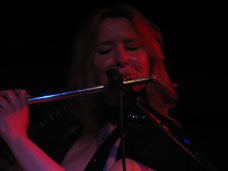
Solo Jazz Guitar, Duos, Trios & Full Band
Recent Performances:
2008 9/13/08 Cynthia & Mitchell's Wedding 7 Degrees Newport Beach Solo guitar & Trio w/Bass & Drums: Jazz, Blues & Pop music 9/12/08 Kimberley's Wedding City Club on Bunker Hill Los Angeles Solo guitar: Jazz, Blues & Pop music 8/30/08 Bristol Farms Lobster Fest Redondo Beach The Mark Fitchett Band Jazz Quintet featuring Stephanie James on Flute. Guitar, Bass, Drums & Keyboards Contemporary Latin Flavored Jazz/Smooth Jazz 8/28/08 Cal State Long Beach Library Long Beach, California Duo Guitar & Upright Bass Jazz Standards 8/23/08 Peninsula Promenade Summer Concert Rolling Hills Estates 5-Piece Ensemble Guitar, Keyboards, Vocals Drums & Bass Classic Rock & Blues 8/16/08 Mabley Wedding Ceremony Palos Verdes Solo Wedding Ceremony Guitar 5 piece Jazz Ensemble for Cocktails 6 Piece Ensemble for Dinner & Dancing Guitar, Keyboards, Vocals Saxophone, Drums & Bass Jazz, Pop, Rock, Disco 60,s -90's music Smooth Jazz 8/8/08 Wedding Ceremony Palos Verdes Classical guitar & Flute: Classical music 8/5/08 Palos Verdes Street Fair Sponsor Dinner at The Peninsula Grill Palos Verdes Solo guitar: Jazz & Pop music 7/31/08 Ice Cream Social Long Beach Guitar Duo: New Orleans & Blues Styles 7/26/08 70th Birthday Laguna Beach Guitar & Vocal Duo: Jazz & Pop music 7/24/08 Lunada Bay Concerts in the Park Series (set 1) The Mark Fitchett Band Jazz Quintet featuring Stephanie James on Flute. Flute, Guitar, Bass, Drums & Keyboards Contemporary Latin Flavored Jazz Lunada Bay Concerts in the Park Series (set2) The Mark Fitchett Band Blues Set featuring Blues Vocalist Donna Butler. Guitar, Bass, Drums & Keyboards Blues 7/17/08 Stratus Financial Torrance Solo guitar: Jazz & Pop music 7/13/08 21st Birthday Scotties Restaurant in Hermosa Beach Solo guitar: Jazz & Pop music 6/21/08 Redondo Riviera Summer Festival Jazz Quintet featuring Stephanie James on Flute. Flute, Guitar, Bass, Drums & Keyboards Contemporary Latin Flavored Jazz 6/15//08 Garden Walk in Anaheim Solo Jazz, Rock & Blues Guitar 6/14//08 Garden Walk in Anaheim Solo Jazz, Rock & Blues Guitar 5/17/08 Palos Verdes Marathon Jazz Quintet featuring Stephanie James on Flute. Flute, Guitar, Bass, Drums & Keyboards Contemporary Latin Flavored Jazz 5/31/08 Palos Verdes Street Fair Jazz Quintet featuring Stephanie James on Flute. Flute, Guitar, Bass, Drums & Keyboards Contemporary Latin Flavored Jazz 4/5/08 Alva's Performance Venue San Pedro Jazz Octet featuring Stephanie James on Flute. Vibraphone, Flute, Guitar, Bass, Drums & Keyboards Contemporary Latin Flavored Jazz 3/15/08 Palos Verdes Women's Club Spring Fundraiser Jazz Trio: Guitar, Piano & Saxophone 2007 12/07 Cal State Long Beach party Jazz Trio: Guitar, Bass & Drums Holiday Jazz 12/3/07 City of Rancho Palos Verdes Holiday Dinner Sax & Guitar Duo: Jazz Holiday Music 12/2/07 Palos Verdes Junior Women's Club Holiday Luncheon 4-Piece Band: Jazz Holiday Music 11/14/07 2007 Educator of the Year Awards Dinner presented by Palos Verdes Peninsula Chamber of Commerce & Rotary Club of Palos Verdes Peninsula Rancho Palos Verdes Solo guitar: Jazz & Pop music 11/09/07 Lunada Bay Elementary School Fundraiser Los Verdes Golf Course in 4-piece band: Classic R&B, Rock and Blues music & Cocktail Jazz 11/03/07 Peninsula Center Library Art Show Palos Verdes Jazz Trio : Jazz music 11/02/07 Point Vicente School Fundraiser Los Verdes Golf Course in 5-piece band: Classic R&B, Rock and Blues music 9/20/07 Palos Verdes Chamber of Commerce Events & Mixers Jazz Trio : Jazz music 9/16/07 Wedding Ceremony Fort MacArthur in San Pedro 4-piece band: Classic R&B, Rock and Blues music 9/1/07 Fiesta Hermosa 5-Piece Band: Classic Rock music 8/25/07 Bristol Farms Lobster Fest Jazz Quartet: Jazz music 8/4/07 Wedding Ceremony 7/14/07 Point Vicente Interpretive Center Anniversary in Rancho Palos Verdes 7/21/07 Wedding Ceremony Malibu Jazz, Blues, Rock 7/26/07 Business luncheon Fullerton Solo Guitar: mixture of Jazz & Pop music 6/29/07 Lee & Susan's Wedding Ceremony at the Point Vicente Interpretive Center in Rancho Palos Verdes 6-Piece Band: Classic R&B, Motown and Rock music 6/8/07 Palos Verdes Junior Women's Club Dinner at the Norris Theater in Rolling Hills 5-Piece Band: Classic Rock music 6/3/07 Palos Verdes Street Fair Blues Band on the mainstage & Jazz band on the alternate stage (busy day!) 5/5/07 Private Party Palos Verdes Solo Guitar: mixture of Jazz & Pop music 5/4/07 Rotary Club Party at the Point Vicente Interpretive Center in Rancho Palos Verdes Solo Guitar: mixture of Jazz & Pop music 2/10/07 Peninsula Montessori Fundraiser Los Verdes Golf Course Rancho Palos Verdes 6-Piece Band: Classic R&B, Motown and Rock music 2006 11/19/06 Don Ferrara's 80th Birthday at Simon's Restaurant in San Pedro 3-piece band: Guitar, Bass & Drums mixture of Jazz & Blues music 11/18/06 Palos Verdes Library Art Show Solo Guitar: mixture of Jazz & Pop music 11/15/06 2006 Educator of the Year Awards Dinner presented by Palos Verdes Peninsula Chamber of Commerce & Rotary Club of Palos Verdes Peninsula Rancho Palos Verdes Solo guitar: Jazz & Pop music Woman Lawyers of Long Beach Summer Party 2006 Solo Guitar: mixture of Jazz & Pop music Los Alamitos Ranch Long Beach (Ranch tour) Solo Guitar: Spanish & Classical Style music Redondo Beach Chamber of Commerce Events Solo Guitar: Jazz & Pop Standards December 05 Woman Lawyers of Long Beach (Christmas house party) Solo Guitar: mixture of Jazz & Pop Standards with Holiday Music & Classical music Great Wines International San Pedro (Wine tasting) Solo Guitar: Variety including Spanish, Classical, Jazz, Pop and Latin music The Golden Lotus Restaurant Palos Verdes (Dinner entertainment) Duo Guitar: Jazz and Pop Standards Jazz Quartet: Blues and Jazz music standards Palos Verdes Inn Redondo Beach (Birthday dinner) Solo Guitar: Jazz and Pop music standards Palos Verdes Chamber of Commerce Events & Mixers Solo Guitar: Jazz & Pop music Standards Jeff Jones (Various private parties in homes and restaurants) Solo Guitar, Trios and Quartets: Classical, Spanish, Jazz , Pop & Blues Standards El Camino Business Development (Business presentation) Solo Guitar: Jazz & Pop music Borders Books & Music Torrance Jazz Trios & Jazz Quartets Guitar, Bass, Drums & Piano Chuck Wilson ReMax Realtors (Private parties, memorial service) Quartet: Jazz, Blues, Rock and Country music Solo Jazz & Blues Guitar Block at Orange Outdoor Mall Orange County Guitar & Trumpet Duo: Jazz & Blues Standards Wells Fargo Long Beach Solo Jazz Guitar music Kurt Gibbs (Cocktail party) Bass and Guitar Duo: Jazz & Blues Standards Rick and Nancy Aylward (Retirement party) Palos Verdes Quartet: Jazz & Blues Standards Guitar, Bass, Piano & Drums Antoinette Khvang (Halloween block party) Guitar Duo: Jazz standards Huntington Park High School (Christmas Party) Jazz Trio: Drums, Bass & Guitar Holiday music and Jazz Standards Cal State Long Beach (Functions for various departments) Solo Guitar: Jazz Standards Trio: Jazz & Blues Standards Point Vicente School Palos Verdes (Picnic/Fundraiser) Piano and Guitar Duo: Jazz and Blues El Camino College Torrance Rock, Blues Quartet Drums, Bass, Piano & Guitar Susie's Bar & Grill Hermosa Beach Guitar Duo: Pop, Rock, Blues Sousa Enterprises (Company Party) Los Angeles Solo Guitar: Jazz & Pop Standards Palos Verdes Women's Club (Fundraisers and events) Jazz, Blues Trio: Guitar, Bass & Drums Schematic Culver City/Los Angeles Solo Guitar: Jazz & Pop music Company Party
Mark has performed at many events in the Los Angeles area as well as in the the outlying cities in Los Angeles county. Mark is also a sought after guitar instructor and is available for private lessons. He has been performing in Los Angeles for almost 30 years.
|


Mark Fitchett and Chasing The Blues 2022 Preview
The Plan...Now What?
SoundCloud
Mark Fitchett · Inside The Outer Circle,
Mark Fitchett & Mark Fitchett Jazz Guitar Duets
xxxxxxxxxxxxxxxxxxxxxxxxxxxxxxxxxxxxxxxxxxxxxxxxxxxxxxxxxxxxxxxxxxxxxxxxxxxxxx
ink to Free iphone Apps by Mark Fitchett
 ink to Free iphone Apps by Mark Fitchett
 Get the free Mark Fitchett Android App HERE
Blog: The Daily Fitchett
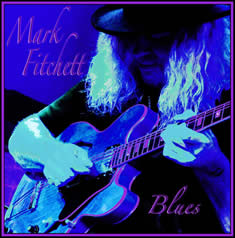
Mark's recordings
of classic blues.


FITCHETT NEWS FLASH:
"I have realeasedmy countrt/rock album" Listen to Samples |
MUSIC |
|
|
| YouTube Classic Jazz Playlist |
| Subscribe to Mark's YouTube Page |
| Subscribe to YouTube Guitar Lessons |
| Jam Tracks |
Mark Fitchett performs with renowned South Bay blues vocalist Donna Butler.
Smokin' Hot Blues Guitar YOUTUBE LINK 1 Smokin' Hot Blues Guitar YOUTUBELINK 2
YouTube Master List Jazz Blues - Rock Blues - Soul Jazz - Rock & Roll
More guitar than you ever thought you could handle!
Canadian guitarist, Mark Fitchett's latest project is a collaboration with jazz flutist/composer Stephanie James.
Smooth Jazz - Jazz Guitar meets Jazz Flute
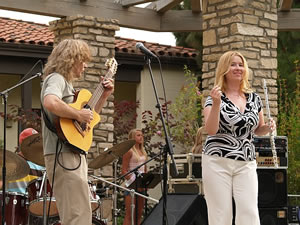
To check it out click HERE
www.stephaniejames.com
CLICK HERE to purchase Mark's Music (So he can keep buying strings!)
FREE STUFF (coming soon)
Stuff People Say: (only the good!!!)
Jennifer Fisher - LOS ANGELES TIMES
"Mark Fitchett's heavily synthesized score boldly underlined the few
moods that prevailed nearly two hours, without intermission, using lots of
reiterated spooky percussion, eerie drawn out notes and some fuzzy rock guitar
riffs for evil atmosphere."
(Modern dance music (listen) composed for
Regina Klenjoski's Dance Company (RKDC)
production: "Original Sin " performed
at the James Armstrong Theater in Torrance.)
BAM MAGAZINE
"Fitchett is currently one of LA's most fascinating guitar players."
BAM MAGAZINE
"..this man has an honest and emotional relationship with his instrument.
He mixes jazz, hard rock, metal, and rhythm & blues into a soulful conversation of music."
Lauren M. Dennis - EASY READER
"A ten-piece orchestra located onstage accompanied the work.
It was an apt position for a composition that guided the piece
with captivating and pulsating but lyrical music. The original
score was by Torrance-based composer Mark Fitchett."
(Modern dance music (listen or see) composed for Regina Klenjoski's Dance Company
(RKDC) production: "Love Lies Waiting" performed
at the John Anson Ford Ampitheater in Los Angeles)
Jim Farber - DAILY BREEZE
"...an evocative original score by Mark Fitchett."
(Modern dance music (listen) composed for
Regina Klenjoski's Dance Company (RKDC)
production: "Original Sin " performed
at the James Armstrong Theater in Torrance.)
MARK'S WIFE (unbiased opion)
"Mark is the best guitarist in the world!"
MARKS MOM
"When did he start playing guitar? "
MARK'S DAD
"Get a real job!"
MARK'S GUITAR STUDENTS
"You jam dude!"
TED GREENE
"The Hurricane !"
South Bay Rockers Magazine
"...my ears were treated to some amazing guitar wizardry courtesy of
Cult Of The Wrong Note...Mark Fitchett on guitar who could quite possible
launch a space shuttle with his playing."
Music Connection Magazine
"This is an instrumental band that writes strong melodic tunes. A perfect band
for Relativity Records."
Realities (90's fanzine)
"In his playing, Fitchett mixes haunting melodies with technical solos and riffs
to form some of the best music I've heard in quite a while."
Random Lengths (Daily Breeze in Torrance)
"Within the last few years Mark Fitchett has established a reputation as one of
California's premier guitar players, compared to the likes of Jeff Beck and
Joe Satriani."
MODERN DANCE
Lester Horton Award Nomination 2010
The Los Angeles Dance Resource Center (DRC)
has nominated Fitchett's modern dance composition for
Regina Klenjoski Dance Company's (RKDC) The Crossings.
Lester Horton Award Nomination 2008
The Los Angeles Dance Resource Center (DRC)
has nominated Fitchett's modern dance composition for
Regina Klenjoski Dance Company's (RKDC) Museum Project.
Tennessee Children's Dance Ensemble Commission 2008
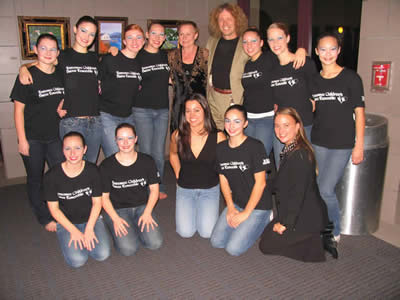
Regina Klenjoski Dance Company (RKDC) Modern Dance
Lester Horton Award Nomination 2010
The Los Angeles Dance Resource Center
(DRC) has nominated Fitchett's modern dance composition for
Regina Klenjoski Dance Company's (RKDC) "The Crossings ".
Lester Horton Award Nomination 2007
The Los Angeles Dance Resource Center
(DRC) has nominated Fitchett's modern dance composition for
Regina Klenjoski Dance Company's (RKDC) "Museum Project ".
Museum Project Commission 2007
Regina Klenjoski Dance Company (RKDC) Modern Dance
Lester Horton Award Nomination 2004
The Los Angeles Dance Resource Center
(DRC) has nominated Fitchett's modern dance composition for
Regina Klenjoski Dance Company's (RKDC) "Christian's Lullaby".
Lester Horton Award Nomination 2003
The Los Angeles Dance Resource Center (DRC)
has nominated Fitchett's modern dance composition for
Regina Klenjoski Dance Company's (RKDC) "Love Lies Waiting."
MARK FITCHETT & THE CULT OF THE WRONG NOTE Joe Keawe's, Wilmington Mark Fitchett & the Cult of the Wrong Note (a term taken from a reviewer who panned Stravinsky al-most 100 years ago) call their music "instrumental," but they go far beyond the realm of hard-rock guitar heroes. With touches of blues, country, and even fusion thrown in, these four seasoned musicians from the South Bay can run circles around the current crop of LA whiz kids. There's plenty of maturity in Fitchett’s songwriting, yet the band keeps a sense of fun running throughout. From the well-crafted execution of the vivacious "Put a Lyd on It," to the gently powerful ballad, "Her," there's no no-hum attitude during their show; this is a quartet that believes variety does spice things up. On an outdoor stage in the heart of Wilmington (check your Thomas Guide for the coast’s oil refineries), they managed to pull off a set that lasted over 90 minutes, and still kept each instrumental focused and different. Guitarist Mark Fitchett plays intelligent lines, keeping his solos tight, with a definite beginning and an end. His sustained notes evolved into a flurry of speed, but he never tried to play overly fast simply because he has the ability. Toward the end of this set, he snapped a string during a major guitar solo, yet blithely continued the song on five strings without thinking twice. Capable of a beautiful tone, Fitchett is currently one of LA's most fascinating guitar players. Bassist Rick Hollander, a six-string monster, demonstrated his vast musical vocabulary from a vicious thumb-slapping style to unbelievable, two-handed chord work. Yet, during "Latin," he was able to come back to simple bass lines that followed the percussion. Drummer Chuck Messana played like classic jazz drummers from days past, with wrists inverted, in a fluid motion. He was able to kick the band forward, then hang back and provide a strong foundation. His remarkable sense of time was complemented by his graceful style. And Craig Roth's keyboards were reminiscent of Chick Corea, creating subtle textures and refusing to overpower the songs with mechanical tones. His swirling work added to Fitchett’s cerebral version of the Beatles' "Strawberry Fields Forever." It is interesting to note that the Wrong Note played through the headliner's equipment for the most part— which is amazing since most bands sound perfectly ordinary when they don't have their own amps and drums. The only casualty was Hollander, who couldn't pull a decent tone out of a standard-issue SVT cabinet. While he was by far one of the most impressive bass players I've ever seen, he also sounded pretty flat and muddy. But this is probably remedied when the Wrong Note plays on its own gear, and I look forward to seeing these guys pull out all the right notes at their next show. —Moira C. Valencia MAY 7. 1993/BAM MARK FITCHETT & CULT OF THE WRONG NOTE Taking a detour from the mainstream, this group of guys is out to muscle its way into a very small fraternity—namely, the guitar-driven, jazz/rock instrumental scene. If s the turf of fret gods like Joe Satriani and Jeff Beck, who—wouldn't you know it? — are the guys Fitchett is most often compared to. The Beck connection isn't far off the mark, as it is the Blow by Blow album that Fitchett credits as the inspiration for his musical direction. Indeed, inside his organic and pliable licks, one hears the aforementioned influences, as well as those of Johnny Winter, Larry Carlton, Albert Lee, and maybe a little Steve Vai as well. What impressed me most about Fitchett was that, despite a degree in guitar theory, he doesn't simply rehash technique by the numbers the way a lot of other "school boys" do. Although occasionally lapsing into the "how many notes can I fit in here?" syndrome, for the most part, this man has an honest and emotional relationship with his instrument. He mixes jazz, hard rock, metal, and rhythm & blues into a soulful conversation of music. His skills as a transcriber are sought out, and he has published several books for acts like Tesla and Lita Ford. But it's clear he has a talent for composing as well...and he knows exactly what he hopes to do with it: "I knew going into it that, for instrumental guitar music, there's not a big market... I don't have the illusion of mega-stardom. I have the goal of touring, and maybe opening up for major acts." The six songs on the tape (including a very snazzy cover of the Beatles' "Strawberry Fields Forever") demonstrate his band's ability to help him reach that goal. Craig Roth, formerly with African reggae stars Alula and the Presidents, plays the keyboards with fluid grace and subtle bravado. Rick Hollander, who's done session work with Natalie Cole, slaps his bass like a madman with what seems like more fingers then he should possess. Lastly but not leastly is drummer Chuck Messana, whose wild resume includes session work with folks from Debbie Reynolds and Barbra Streisand to Frieda Payne and Francis X. His beat is as supple as a cat's backbone and as steady as a clock, giving the band cohesion as well as the freedom to explore. This is obviously a seasoned group of musicians that knows what works and how to work it. Although it may not be "mainstream," and I admittedly don't listen to this genre often, I don't need to be slapped up the side of my head to recognize a groove when I hear it. The band is a real buzz, and fans of this musical style deserve to hear it. —Bart Mann JULY 2. 1993/BAM MARCH 21-28, 1996 Vancouver B.C. Canada Local Knowledge Junkie Scores Place in Hollywood's Guitar Pantheon BY STEVE NEWTON Everyone has heard the stories of starry-eyed youths who journey to Tinseltown with visions of glory and not much else, but they might not have heard about the kid from Richmond who hopped a bus for Hollywood with the dream of becoming a professional guitar player. Mark Fitchett did just that one March day in '79, and he actually managed to beat the odds by finding success in La La Land. As well as leading his own instrumental recording act, Cult of the Wrong Note, Fitchett is also one of the Los Angeles area's most sought-after guitar teachers. In his spare time he writes instructional guitar books, his latest being Chops Builder, to be published by Cherry Lane Music (New York) this month. And his main ambition is to have a symphony he's composed performed by a full orchestra. Pretty lofty stuff for a guy who started out with just a guitar, a bus ticket, and 150 bucks. Fitchett got hooked on music while he was a Richmond elementary-school student. Like most kids, he started out on the recorder, but it didn't take long for him to become part of the school local band and add a much more demanding instrument to his repertoire. "I loved Herb Albert and the Tijuana Brass," recalls Fitchett, on the line from his Redondo Beach, California, home and studio. "So when they came around with the band instruments and said, 'Whaddya wanna play?' I said 'Trumpet.' I was always in the music class playing very poor trumpet, and then when 1 was 12 or so I started taking guitar lessons because my best friend did." He signed up, then went home and told his mom, "Guess what you got me for my birthday?" Fitchett took his first guitar lessons at a place called Jack Bourne's Academy of Music, a refurbished Richmond garage that specialized in accordion lessons. He picked up some chords, a bit of reading, and a few Creedence Clearwater Revival licks from "a guy named Ralph," but after six months or so he called it quits. Then he took the "street learning" route, picking up Hendrix and Led Zeppelin licks from his buddies. At 17 Fitchett joined his first band, Overproof, which played at the old Surf Cabaret and put on private-hall parties. "It led to frustration," says Fitchett. "I wanted to do some original material, but they were just not receptive, and [the original-music scene] just seemed really dead around Richmond or Vancouver. So when I was 20 or so I hopped on a Greyhound to Portland, and then hitchhiked the rest of the way to beautiful downtown Hollywood." Fitchett eventually found some landscaping work and an apartment, and met enough musicians to start his own group, the Fitch Band, which played a lot of Hollywood showcase gigs. Fitchett handled the guitar and vocals in that band, but after a couple of years made the move to the kind of music that would become his forte. "Ever since I was about 17 I wanted to be an instrumental guy like Jeff Beck," he says. "He put out an album in the '70s called Blow by Blow, and I was just totally influenced by that. I went, 'God, if I could ever be good enough to do that, that'd be just the thing." Fitchett worked toward that goal by studying guitar, composition, and arranging at Southern California's Grove School of Music, then in '89 formed Mark Fitchett & Cult of the Wrong Note with bassist Rick Hollander, keyboardist Craig Roth, and drummer Chuck Messana. The band—which took its name from an unflattering 1913 Paris Times review of Igor Stravinsky's The Rite of Spring—has caught on with the guitar-god crowd enamored of the likes of Joe Satriani, Carlos Santana, Steve Morse, Steve Vai, and the aforementioned Beck. (Fitchett's CD is not Currently available in Vancouver record stores, but local fret freaks can order it by calling [310] 540-6767.) When not heading his world-class quartet—which is currently working on its sophomore release—Fitchett can usually be found either giving lessons or taking them, though not from a guy named Ralph anymore. Fitchett studies (studied) with the likes of the Hellecaster's Will Ray nowadays, as well as Jamie Glaser (sideman to Chick Corea and Jean-Luc Ponty) and jazz "chord maestro" Ted Greene. "I'm a junkie for knowledge," he says. "I'm a guitar player professionally, and then for a hobby I study guitar."
EASY READER Mark Fitchett, guitarist and bandleader for the metal-oriented jazz-rock quartet Cult of the Wrong Note, stood center-stage at the Red Onion in Redondo Beach and began to finger the rainbow-colored Roscoe hanging at his waist. Keyboard player Craig Roth kicked off the familiar, sing-song intro to the Beatles' "Strawberry Fields," and then Fitchett launched the song into space, making his guitar bawl out the melody with a fevered psychedelia that sent me half way to flashback city. Fitchett's guitar was alive throughout the set of mostly original tunes, spitting out staccato licks, bending notes, at times recalling the style of Joe Satriani. He showed off a disciplined technique developed through years of formal training, and displayed the abundant energy that he has used to become a prolific composer, a sought-after transcriber for musicians like Tesla and Lita Ford, and a performer who has earned radio airplay from big L.A. stations. Fitchett's stage presence was playful, boyish, and animated by a low-level nervous energy — in other words, it's exactly the same as his offstage presence. During an interview in the eight-track studio of a Hermosa Beach apartment the 35-year-old Fitchett sat in a swivel chair and fiddled compulsively with an unplugged guitar. His answers tended to come in short, shy bursts, but he talked more easily when the subject was other musicians. Like Joe Satriani, whom he admires. Or Jeff Beck, whose album "Blow by Blow" inspired Fitchett to focus on writing and performing instrumental guitar tunes. Satriani and Beck are among a handful of guitarists who can make a very good living at instrumental music that's a touch outside — one might say a touch above — much of mainstream rock, and Fitchett's goal with the Cult of the Wrong Note is to work his way into that small club. "I knew going into it that for instrumental guitar music, there is not a big market," he said. "You can name maybe six guys that are big commercial successes with a guitar-oriented rock sound." I don't have the illusion of mega-stardom, I have the goal of touring, maybe opening up for major acts." His tight, muscular band has produced a polished, powerful demo that shows off lots of musicianship and passion, and the boys have been preparing to contact record labels big and small in search of a deal. "We do have a game plan," said the energetic Fitchett, whose bookshelves are crammed with titles like "Power Talk" volumes 1-12, and motivational audio cassettes by Anthony Robbins, the guy on TV with the great big teeth. "Yeah, 1 got sucked into Tony Robbins," Fitchett said. "It’s pretty good. It’s great, if you apply it. Me and the bass player are into him a lot." When he's not playing with the Cult of the Wrong Note, Fitchett is motivated to teach guitar, to play with the Campbell Bros, contemporary jazz band (he's introduced as "a brother of a lighter shade") and to write like mad. "1 like to compose orchestral music," he said. "I've got to get a symphony done for the L.A. Philharmonic. They don't know it yet." The British Columbia native started playing guitar when he was 14. Ten years ago he formed the Fitch Band, whose pop-rock songs captured occasional play on KLOS, KMET and KROQ. He studied with jazz guitarist Ted Greene, and graduated with honors from the prestigious Grove School of Music in Studio City in 1989 While at the Grove School, Fitchett learned to transcribe music, and he has written internationally published music books including "Tesla: Mechanical Resonance," "The Great Radio Controversy" and "Lita Ford: Lita." And during a break from the serious music student thing, Fitchett has gotten some air play on Dr. Demento's venerable radio show with his "Led Zeppelin Reunion Tour: Vegas '99," a satirical medley of Led Zepplin hits played lounge lizard style. "I like to keep busy," Fitchett said. "I don't like TV, the only time I read a book is in the bathroom." Besides motivational materials, Fitchett’s bookshelves are stuffed with symphonic scores and books on music theory and history. In a world awash with the sounds of rock bands that play and sing one note, Fitchett believes that the key to songwriting is, well, songwriting. You know, melody. And he hopes he can take his kind of music all the way, or rather part of the way, to the top. "There's a niche for it, it’s just limited." Robb Fulcher "Wrong Note, Right Track," The Easy Reader, Volume XXIV, Number 39, May 11, 1995 by Bondo Wyszpolski "I try to be goal-oriented, " says Mark Fitchett. "I try to write things down, try to really motivate myself. It's hardly ever that I'm just sitting down." This is how the South Bay guitarist and songwriter has come to be in four different bands, all of them active and working simultaneously. There is, first off, Cult of the Wrong Note, an all-instrumental jazz-rock band that showcases the group's original music, most of it Fitchett's. The line-up also includes Rick Hollander on bass, Chuck Messana on drums, and Craig Roth on keyboards. Second, there's the Mark Fitchett Trio, or Quartet, or sometimes just Mark Fitchett and Friends, the semi-official house band at Hava Java's. This incarnation (Fitchett, Roth, Messana, and currently Gabe Kreiswirth) plays old jazz standards on most Saturday evenings. Group three would be The Campbell Brothers, an instrumental sextet featuring saxmen Garland and Alex Campbell, with David Campbell on drums, Daryl Bomar on bass, Rick Grajeda on keyboards, and you know who on guitar. "They describe themselves as urban contemporary," Fitchett says. "It's kind of 70s-style funk-jazz; Grover Washington. The band has played around the South Bay. We've done everything: malls, art show openings, weddings. The band works quite a bit. "The latest effort," he continues, "is called Blues Without A Net--and that's members of Cult of the Wrong Note" (Fitchett, Hollander, Messana--with Rick Grajeda of The Campbell Brothers). "We know a lot of musicians, so it's easy to mix and match." This line-up is "the house band for Sunday afternoons at Moose McGillycuddy's in Redondo Beach. That's an open-mic forum for musicians to come sit in... And we serve as the back-up band." This has been happening at Moose McGillycuddy's for only the last two months or so, and Fitchett claims the momentum has been building. The group comes on and plays a few blues tunes, then anyone can walk up and join them on stage. Fitchett also assures me that other musicians aren't afraid to participate. "If they falter a little bit, everybody's very supportive; because there're a lot of amateurs in the crowd. Everybody, no matter how good or bad they do, gets a good round of applause. It's a real supportive audience. It's not like a competition." Not to shortchange his skills as a guitarist and songwriter, but Fitchett's two most valuable assets may be his abundant enthusiasm and his sensitivity toward other musicians, not least among these being aspiring musicians. In addition to frequently playing live, Fitchett also teaches a beginning and intermediate blues-rock guitar night school class at Redondo Union High School, which he's been doing for a few years now. On other evenings, he gives private lessons at his home. Previously, he's taught a guitar class for the Torrance Recreation Department. In fact, many of his current and former students are among those who show up on Sunday afternoons at Moose McGillycuddy's. Perhaps Fitchett's high school classmates and instructors wouldn't recognize him if they encountered him today. "I did real terrible in school," he says. "I was the type [about whom] the teacher would write on the report card: 'Mark could do very well in school if he would pay attention.' Or, 'Mark has a lot of potential, but his mind seems to wander.' "Then, when I was 28 or 29, I'm now 37, I signed myself up to a guitar music school, on my own free will. And I did real well." This was the well-known Grove School of Music. "Anyway, I was kind of amazed at myself. It was full-time, and as I was going through it, I [thought], 'I never had this attitude when I was in high school or at home.' But we all know it's because when you want to do something... Right?" In short, he'd found his direction, and it was like a banner in the wind with notes, bars and staves. One might get the impression that Fitchett has been a fixture of the South Bay since the day he was born, but actually his roots are so far north, they're in another country: Canada. In 1979 he was living in Vancouver and he wanted to form a band and play originals, but it seems he didn't have much luck in recruiting the interest of his fellow musicians. And so one day, with a bag, a guitar, and $150, Fitchett hitchhiked to Los Angeles." He then found a ratty hotel in Hollywood. A week later, as he was getting set to return, he came upon some temporary employment, and--as they say--one thing led to another. "Circumstance after circumstance fell into my lap where I could afford to stay. Like I said, I had only 150 bucks." Fitchett met up with other musicians and began playing. He joined a group, "the singer of this band had a connection down in Hermosa Beach," and so Fitchett and a few others moved into a bootleg apartment near the downtown area. This was the latter part of 1979. In those days, he admits, he even slept in the park a few times. "Hey, I did the whole street thing. And I didn't do that when I was at home; I came from a fairly middle-class family. It was a great experience, and if someone said to me, 'Would you do it again?' I'd say, 'Absolutely, without a shadow of a doubt.' Everything I did then, it was great. It was wonderful." On the other hand, Fitchett claims that he wasn't foolish. He kept a fairly clear head, he says, unlike those people who might see living on the street or in fleabag hotels as a chance to get high and party. "The party did not figure into the equation at all," Fitchett says. "So that, I think, is part of the reason I survived." From Hermosa, he moved to Carson, and even lived in Inglewood for a time. Recently, he moved from Hermosa to Redondo Beach. Looking back, Fitchett credits Bob Wagstaff of Pier Music for helping to support his musical endeavors in those early days. Even now, Fitchett gets "a lot of referrals" from Pier Music for would-be guitarists who want to take lessons. On this matter, that of encouraging up-and-coming musicians, Fitchett addresses their parents: Support your kids. "That's how we nurture our artists," he says. "I'm sure a large percentage of all the guitar students in the world are never going to be artists, but you need to have that (encouragement) for those who are." He says you can probably ask just about any successful rock musician and they'll say, 'Oh yeah, I remember when we used to jam in Joe's garage.' When asked which local artists he admires, Fitchett names several but begins with Carson's The Regulators, a group that had a not-very-well promoted disk last year on Polydor Records. Fitchett also names such South Bay luminaries as Barry Levinson (of The Automatics), T.J. Parker and Mark Shark, who not only has a Rykodisc contract with Indian poet John Trudell, but performs with The Zydeco Party Band. Referring to the latter, Fitchett says, "I had them play at my wedding." Although Fitchett asserts that he'd focus heavily on any one of the bands he's in if it suddenly took off and became successful, Cult of the Wrong Note is clearly his favorite. "What kind of music is it? It's rock with a jazz edge, or jazz with a rock edge. It's too much jazz for a rock listener, and too much rock for a jazz listener. So, we're screwing ourselves, basically." Squirming under the spectre of being pigeonholed--in which a band is not only pegged, but nailed--Fitchett tells me the pre-fabricated blurb he recently put on the internet: Fans of Jeff Beck, Carlos Santana, Joe Satriani, and Steve Morse from the Dixie Dregs, would probably like to check out this band. Cult of the Wrong Note also has a CD, on the Fitchett's own Screwloose Records, and the public relations department seems to be comprised of Fitchett, his wife Geri, and bassist Rick Hollander. Not too surprisingly, Fitchett remarks that, "I would rather be playing my guitar and writing and creating." A second Cult of the Wrong Note CD is currently underway, and we could be seeing it by the end of the year. While Fitchett is looking forward to its release, he also claimed to be very pleased with the band's maiden effort. In the meantime, he's trying to line up foreign distribution for it. Are any other the other groups he's working with considering the release of an album? "The Campbell Brothers are also putting out a CD," Fitchett replies. "We recorded all of the material. It's in the can, as they say." And although no one's even talking about the studio at this point, Fitchett sees a potential hot future for the Rick Hollander-initiated Blues Without A Net, especially if they start performing with a young female singer who's a former guitar student, and who has, apparently, a knock-out voice. "I've put myself in a position now," Fitchett says, "where I'm making it not by playing but by doing a lot of teaching. So, I'm not stuck having to go out and play Top 40 or music I don't like just to pay the rent. I'm in a position where I can set my own hours, and whenever I want to do a gig, it's because it's fun." While this allows some flexibility, time remains at a premium. Another project in the works is a symphony--Fitchett's been studying with Manhattan Beach film composer Terry Plumeri--but with four bands and countless students that come first, this is one career move that may have to wait. "If it was the perfect time in my life," Fitchett says, "I'd be playing guitar all day and doing a lot of practice, because I'm a real addict about that, and I really want to strive to be better than I am. "I love so many different styles. As well as being the jazz guy, etcetera, I like the rock stuff, the blues stuff, all the different stuff. So, if I had the time, I'd be doing that, plus doing a lot of writing. "I'm involved in too many things," he says, but with the possibility of agreeing to write instructional material, and maybe even one day opening up a guitar studio, it's hard to imagine Mark Fitchett doing less. His name is one we're likely to see for a long time, and in a lot of places. Blues Without A Net: Sundays, 3 to 9 p.m. at Moose McGillycuddy's, 179 N. Harbor Drive, Redondo Beach. Call (310) 372-9944. Mark Fitchett & Friends: Most Saturday nights at Hava Java, 1133-F Artesia Blvd., Manhattan Beach. Call (310) 798-8526. The Cult of the Wrong Note CD is available at Tower Records, Torrance, California. It's also available by calling (310) 540-6767. ER
Back to Articles Back to Home
THE GUITAR'S ROLE IN THE BLUES
Also, it is possible to emulate some of the "vocalisms" inherent in blues singing, such as slurring between the pitches to produce among others the main "blue note" between the flatted 3rd and major 3rd. This is easy to accomplish by sliding between the pitches on a single string, or actually bending a string to get the "in between notes" Other examples are slurring between the 4th and flatted 5th, between the flattened 5th and natural 5th, between the 2nd and flattened 3rd/major 3rd, between the 6th and flattened 7th and between the flatted 7th and tonic. It should be noted that these pitch "bends" are often less than a half step, and are often in the realm of "1/4" or even "1/8" steps and anything in between. This is something that is felt by the performer and tends to add a lot of emotion to guitarist's and vocalist's performance. As electric guitars came more into prominence in the later years, guitarists were able to bend their strings to much higher pitches than the usual ½ step (or less) places found in earlier blues. In this current day, it not unusual to hear in addition to the small slurs, whole step, minor 3rd and even major 3rd bends. However, bottleneck or slide guitar as it became known allowed a guitarist almost unlimited slurring range since the glass never made contact with the actual frets but merely slid across the tops of the strings. Compared to a banjo, other advantages of the guitar include a greater range (especially on the low end which gives chords a much fuller sound), and the capability of a considerable amount of expression and dynamic range. (Try to play a banjo softly!). As well, guitars have considerably more sustain. Banjos are not really known for their singing quality, they go "plunk!" and tend to have an edgy percussive sound.
|